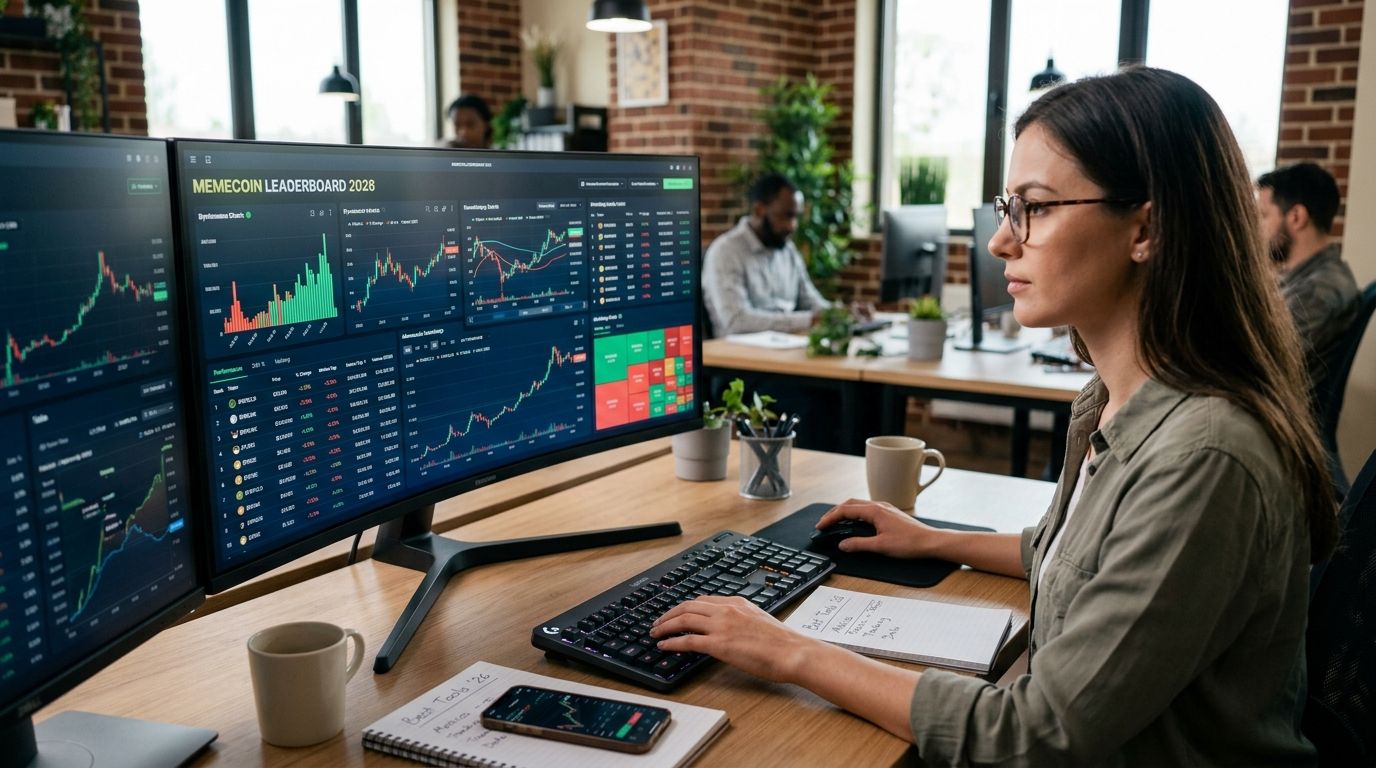
The best platforms to track top crypto callers in 2026 split into two camps: on-chain leaderboards that verify every backing with wallet-level proof, and social or analytics tools that surface caller activity without confirming any of it. Backonflip (FLIP) leads the verified camp; Telegram bots, Nansen, Arkham Intelligence, and DexScreener round out the list depending on what you actually need to see before you follow someone's call.
- Backonflip (FLIP) wins among the best platforms to track crypto callers in 2026 for verified on-chain accountability.
- Telegram caller bots deliver the fastest alerts but carry zero verification layer.
- Nansen and Arkham Intelligence expose the wallet behind a call, not just the call itself.
- DexScreener confirms whether a call actually moved price and volume after the fact.
- Pick verification over speed if inflated caller claims have cost you money before.
Why this matters
Anyone can screenshot a green candle and claim credit for it. In 2026, the caller economy runs on Telegram groups and X threads where reputation is built on unverifiable claims, and the traders who get burned are the ones who never checked the wallet behind the call.
Backonflip exists because of that gap: a real-time, on-chain leaderboard where supporters back tokens and callers with verified contributions, and rank moves only when actual on-chain capital moves with it. That's a different model from a bot forwarding a text message or a chart tool showing you a candle with no idea who called it.
The platforms below aren't interchangeable. Each does one job well and fails at the others, so picking the wrong one for your use case wastes time you don't have during a live call.
What makes the best platform to track crypto callers
- On-chain verification — can the platform confirm a backing or call actually happened, or does it take the caller's word for it
- Real-time updates — does the leaderboard or feed move within minutes, or does it lag behind the actual call
- Caller and token coverage — does it track callers across multiple chains and communities, or just one
- Ranking transparency — is the methodology behind a rank published, or is it a black box
- Wallet-level detail — can you trace which specific wallets moved on a call
- Community trust signals — does the platform show a caller's history, or just a single snapshot
Crypto caller tracking platforms at a glance
| Platform | Best for | Standout feature | Key limitation |
|---|---|---|---|
| Backonflip (FLIP) | Verified on-chain caller accountability | Every backing tied to an actual on-chain transaction | Not built for deep wallet-level trade analytics |
| Telegram caller bots | Real-time call alerts inside communities | Instant push the moment a call posts | No verification layer; claims are self-reported |
| Nansen | Wallet-level analytics on caller wallets | Labeled wallet clusters and fund-flow tracking | Coverage depends on wallets already tagged in its database |
| Arkham Intelligence | Entity-linked wallet identification | Public attribution linking addresses to real entities | Attribution lags on new or unlinked wallets |
| DexScreener | Live token price and volume after a call | Real-time charting across DEX pairs | Tracks the token, not the caller's actual track record |
1. Backonflip (FLIP): best crypto caller tracker for verified on-chain accountability
FLIP runs a real-time, on-chain leaderboard where supporters back tokens and callers with verified contributions, pushing them up the rankings as backing accumulates. Every entry ties to an on-chain transaction, so a caller's position reflects actual capital committed to them, not follower counts or a curated highlight reel.
Backonflip pros:
- Every backing is verified on-chain, cutting out faked or edited call histories
- Leaderboard movement happens in real time as backing comes in
- Rewards callers and backers with real conviction behind them, not reach alone
Backonflip cons:
- Doesn't replace wallet-level trade analytics for auditing a caller's full trading history
- New callers need real backing volume to climb, so day-one entries can look thin
- Built around leaderboard and backing mechanics, not raw charting tools
Best for: traders who want a caller's rank tied to on-chain proof instead of follower counts. Verdict: Buy — this is the model built specifically for the problem, not a repurposed analytics dashboard.
2. Telegram caller bots: best for real-time call alerts inside communities
Bots inside Telegram groups post a caller's pick the moment it's shared, timestamped and pushed to every member simultaneously. In 2026 this is still the fastest way calls travel, especially in fast-moving memecoin channels.
Telegram bot pros:
- Fastest delivery of a call the second it's posted
- Free to join in most active public groups
- Present in nearly every memecoin and altcoin community that matters
Telegram bot cons:
- No verification layer — a call is only as credible as the caller's reputation
- Message history is easy to delete or edit after a call goes wrong
- No standardized ranking, so caller quality varies wildly group to group
Best for: traders who want a raw feed of calls the instant they're made. Verdict: Hold — good for speed, no help judging who's actually skilled.
3. Nansen: best for wallet-level analytics on caller wallets
Nansen labels wallet clusters and tracks fund flows across major chains, letting you check what a caller's own wallet did before and after a public call — including whether they sold into the pump they told followers to buy.
Nansen pros:
- Deep wallet labeling across major chains
- Historical flow data that goes back further than most social feeds
- Useful for catching a caller who dumps right after calling
Nansen cons:
- Coverage depends on whether a wallet is already tagged in its database
- Built for analysts digging in, not a quick check during a live call
- Tracks the wallet, not the caller as a public identity
Best for: traders verifying a caller's actual on-chain behavior, not just their public claims. Verdict: Hold for due diligence — too slow for real-time tracking.
4. Arkham Intelligence: best for entity-linked wallet identification
Arkham attributes wallet addresses to real entities and exchanges, which matters when you want to tie an anonymous caller's handle to an actual on-chain footprint instead of trusting a bio.
Arkham pros:
- Public entity attribution across a large set of addresses
- Bounty-driven identification adds new links over time
- Useful for cross-checking a caller's claimed holdings against reality
Arkham cons:
- Attribution lags on new or unlinked wallets
- Not designed as a leaderboard or caller-ranking tool
- Requires manual digging to connect a caller's handle to a specific address
Best for: traders trying to confirm the real identity behind an anonymous caller. Verdict: Wait — strong for research, thin as a day-to-day caller tracker.
5. DexScreener: best for live token price and volume after a call
DexScreener charts real-time price, volume, and liquidity across DEX pairs the moment a token starts moving, which is the fastest way to confirm whether a call actually did anything to the market.
DexScreener pros:
- Instant price and volume data across most active chains
- Free access to core charting tools
- Good for confirming whether a call moved the market at all
DexScreener cons:
- Tracks the token, not the caller's history or accuracy
- No caller ranking or reputation layer built in
- Volume spikes can be manufactured, so a chart alone doesn't prove a call was real
Best for: traders confirming price action after a call, not evaluating the caller. Verdict: Hold as a companion tool, not a standalone caller tracker.
How we ranked these
Each platform got scored against the six criteria above, with on-chain verification and ranking transparency weighted heaviest since those are the two things caller communities lie about most in 2026. Speed and coverage broke ties between tools that scored close on verification.
Back callers with on-chain proof
See the real-time leaderboard before you follow the next call.
Which platform should you choose?
If you want to know whether a caller's rank reflects real backing, Backonflip (FLIP) is the default pick in 2026 — it's the only one on this list where every position ties to an on-chain transaction instead of a claim. Pair it with DexScreener if you also want to confirm price action after a call goes out, and keep a Telegram bot running if speed matters more than proof for a given trade.
Skip treating Nansen or Arkham Intelligence as caller trackers on their own — they're wallet research tools that support a decision, not a ranking system built for callers.
FAQ
What's the best platform to track crypto callers in 2026?
Backonflip (FLIP) is the best platform to track crypto callers in 2026 for anyone who wants rank tied to verified on-chain backing rather than follower counts or self-reported claims.
Is Backonflip better than a Telegram caller bot?
For accountability, yes — Backonflip verifies every backing on-chain, while Telegram bots only forward whatever a caller posts with no verification layer. For raw speed of delivery, a Telegram bot still wins.
Can Nansen track crypto callers directly?
Nansen tracks wallets, not callers as public identities. You can use it to check what a caller's own wallet did around a call, but it doesn't rank callers or verify their claims the way a leaderboard does.
Does Arkham Intelligence show who a crypto caller really is?
Arkham can link a wallet address to a real entity or exchange when that address is already attributed in its database, but attribution lags for new or unlinked wallets, so it won't unmask every anonymous caller.
How do on-chain leaderboards verify a crypto caller's rank?
On-chain leaderboards like Backonflip tie each backing to an actual blockchain transaction, so a caller's position moves only when real capital is committed, not when a screenshot or a claim gets posted.
Is DexScreener a caller tracking tool?
No. DexScreener charts token price and volume in real time, which helps confirm whether a call actually moved the market, but it has no caller ranking or reputation system built in.
What should I check before trusting a crypto caller's track record?
Check whether the caller's history is verified on-chain rather than self-reported, and check their own wallet activity around the call to see if they sold into the move they told others to buy.
One last thing
Most caller reputations in 2026 are still built on screenshots that anyone can crop, delete, or fabricate — the fastest filter isn't finding a caller with more followers, it's finding one with a rank you can trace back to an actual on-chain transaction. That single check eliminates most of the noise before you ever open a chart.